Claiming and Reincarnation
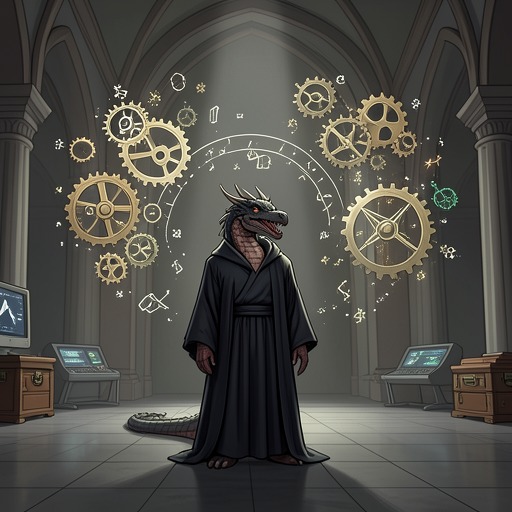
Vainqueur the DragonClaiming and Reincarnation is the divine mechanism by which the gods of Outremonde recruit, empower, relocate, revive, and ultimately claim mortal souls. Its decisive premise is that death is not an absolute ending: for a person who dies on Earth, it may become a passage to Outremonde, another incarnation, or a negotiated afterlife. Yet the system is not a simple gift of salvation. A claimed soul becomes part of a relationship of patronage, and the book repeatedly links divine favor to blessings, service, contracts, donations, competing offers, and debts.
Definition and Cosmic Structure
Claiming begins from the existence of two connected worlds. Mithras explains to Kia that Earth is one world among many and that Outremonde is its twin: similar in shape, but governed by dragons and magic rather than planes and science. Outremonde is threatened by a great blight and requires heroes, giving the gods a practical reason to recruit people from Earth rather than merely observe the crisis from afar.
The gods do not possess unlimited freedom to intervene. Leone states that, a millennium earlier, the gods agreed not to fight directly on Outremonde because their conflicts caused more harm than good without producing a clear victor. Sablar the World Eater’s support for the fomors further prevents direct divine intervention. The remaining strategy is therefore indirect: the gods guide and empower mortals, claim souls from Earth, and turn those souls into champions capable of acting within the world where the gods themselves will not fight.
Reincarnation and the Choice of a New Life
The system presents death as a door rather than a terminal condition. Leone tells Kia that her early death on Earth occurred before she had fulfilled her destiny, but that death can lead either to whatever afterlife awaits or to a new chance in Outremonde. Reincarnation is offered as a choice rather than imposed as a single universal process.
A claimed person may return to Outremonde in the form already possessed, carrying what they have with them, or may be reincarnated into another body. The permitted possibilities include a human, an elf, a dwarf, or even a cat. The exclusions are unusually specific: a soul cannot become a fomor because fomors have no soul, and dragons are forbidden. The restrictions establish that reincarnation is governed by metaphysical rules as well as divine preference; not every body is an available vessel, and the choice of form carries the setting’s moral and theological distinctions into the mechanics of rebirth.
The offer is framed as both opportunity and obligation. Kia is promised a new life, divine blessings, and great boons through which she may forge a new destiny, but Mithras warns that great power entails a corresponding duty. Even failure is placed within the system’s economy of reward: if Kia dies while performing the required service, she will receive a place in the gods’ divine realm. Reincarnation thus binds heroic action and postmortem security into one continuous arrangement.
Blessings, Classes, and Personal Marks
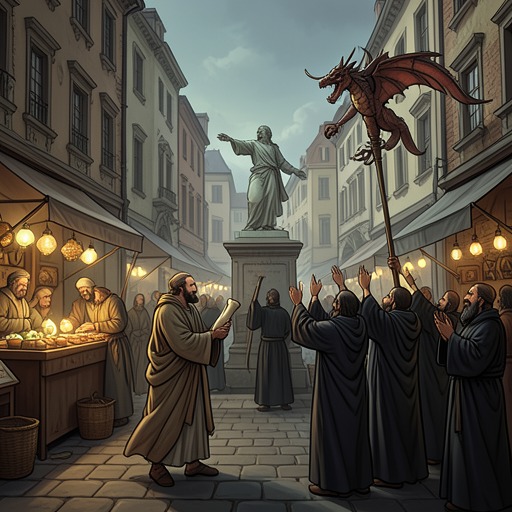
Claiming becomes visible through supernatural marks and measurable benefits. When Mithras and Leone accept Kia as their champion, they raise their hands and cause two symbols to appear as tattoos on the backs of her palms: a shining golden sun and a shield bearing a stylized pen. The ritual is immediately translated into the language of the Class System, which announces that Kia has gained a level in the prestigious Paladin Class and awards her increases to strength, vitality, charisma, and luck.
A related form of divine claiming appears when a Moon Beast touches Victor Dalton’s left arm. The contact leaves the Moon Man’s full-moon symbol shining white on his skin and grants the [Claimed by the Moon Man] Personal Perk. This blessing gives Victor an additional ten percent chance of gaining a Charisma point whenever he levels up, as well as immunity to madness and Moon effects, except those caused by the Moon Man and his servants. The mark therefore functions simultaneously as a sign of ownership, a source of protection, and a rule-based alteration to future growth.
The contrast between Kia’s formal recruitment and Victor’s unsettling marking shows the range of the system. Claiming can resemble a solemn commissioning ceremony, complete with divine symbols and a heroic class, but it can also arrive through a physically disturbing encounter with a star spawn. In both cases, the supernatural relationship is rendered concrete by the body and then processed through the world’s game-like rules.
Divine Competition and Religious Exchange
The fate of a soul can attract several divine claimants. When Victor Dalton faces death, the angel Miel explains that Dice and the Moon Man already have claims to his soul. Camilla, goddess of death, has also made a surprise afterlife proposal, explicitly citing Victor’s exemplary service to the undeathstrial revolution and his continued friendliness toward her church. The language makes the afterlife sound like a competitive field in which gods assess a mortal’s record and submit offers according to recognized service.
The offers are not identical. Miel must arrange meetings with the competing deities, while the Moon Man’s availability depends on being in one of his good phases rather than on ordinary administrative convenience. Shesha’s intervention is more openly commercial. She tells Victor that mortals paid a generous church donation for his revival on Outremonde. The payment is presented as the reason the resurrection can occur, and Victor suspects that the villagers of Murmurin pooled their funds rather than Vainqueur Knightsbane surrendering any of his treasure.
This logic extends beyond resurrection. Victor asks how much Shesha would charge to transport him back to Earth, and the question treats interworld passage as a purchasable service. Shesha’s priestess explains that the goddess improves the prosperity of an inn for a fee, reinforcing the principle that miracles are traded according to market rules. Claiming and Reincarnation therefore belongs to a religious economy in which donation, service, protection, revival, and transportation can all become terms in an exchange.
Patronage, Objects, and Debt
The system’s logic also shapes mortal and minion relationships. Vainqueur Knightsbane agrees to loan Victor Dalton items that Victor can wear because Vainqueur himself is unable to use them. The dragon justifies the decision by recalling Victor’s reliability and exemplary service, while presenting the loan as extravagant generosity. Victor responds with a deep bow and formal thanks. The exchange resembles divine claiming in miniature: an authority grants access to power, and the recipient answers with loyalty and acknowledgment.
Vainqueur later allows Victor to wield his treasures in battle for a more strategic reason. He dislikes spreading his hoard beyond his sight and trusts only Victor not to lose the weapons. The loan is conditional and temporary, pending Barnabas’s creation of weapons for the minions, but it raises Victor’s status by making him the sole trusted bearer of the dragon’s sacred treasures. Power is never detached from obligation; the possession of a gift establishes a relationship that must be maintained.
The same principle becomes darker when Vainqueur calculates Victor’s debt after Shesha’s revival. He declares that Victor owes twelve million, five hundred forty-five thousand, one hundred thirty-three gold coins, in addition to the life debt incurred when Vainqueur raised him as his prized chief of staff. Victor accepts the burden and resolves to find a way to repay it, while Vainqueur imagines the two of them working until they become gods and forcing Shesha to reimburse him for the allegedly excessive service. Resurrection saves Victor’s life, but it does not restore independence; it converts survival into an accounting relationship.
Narrative Significance
Claiming and Reincarnation mediates the central opposition between life and death by refusing to leave either side stable. The dead may return, but return produces a mark, a class, a patron, a service obligation, or a financial claim. The system also mediates the opposition between earthly limitation and heroic possibility: Earth-born characters enter Outremonde with the chance to become champions, yet their new power is supplied by institutions that demand allegiance and repayment.
Its repeated fusion of theology with contracts and game mechanics gives divine action an ironic materiality. A soul can be claimed, a miracle priced, a blessing recorded as a perk, a resurrection funded by a church donation, and a life debt stated to the exact coin. Even the gods’ inability to fight directly does not make them irrelevant; it redirects their power into recruitment, branding, empowerment, and competition over mortal agents. Claiming and Reincarnation is therefore less an escape from worldly systems than their supernatural extension, turning destiny into a negotiated exchange whose rewards are real, whose rules are visible, and whose obligations continue after death.